
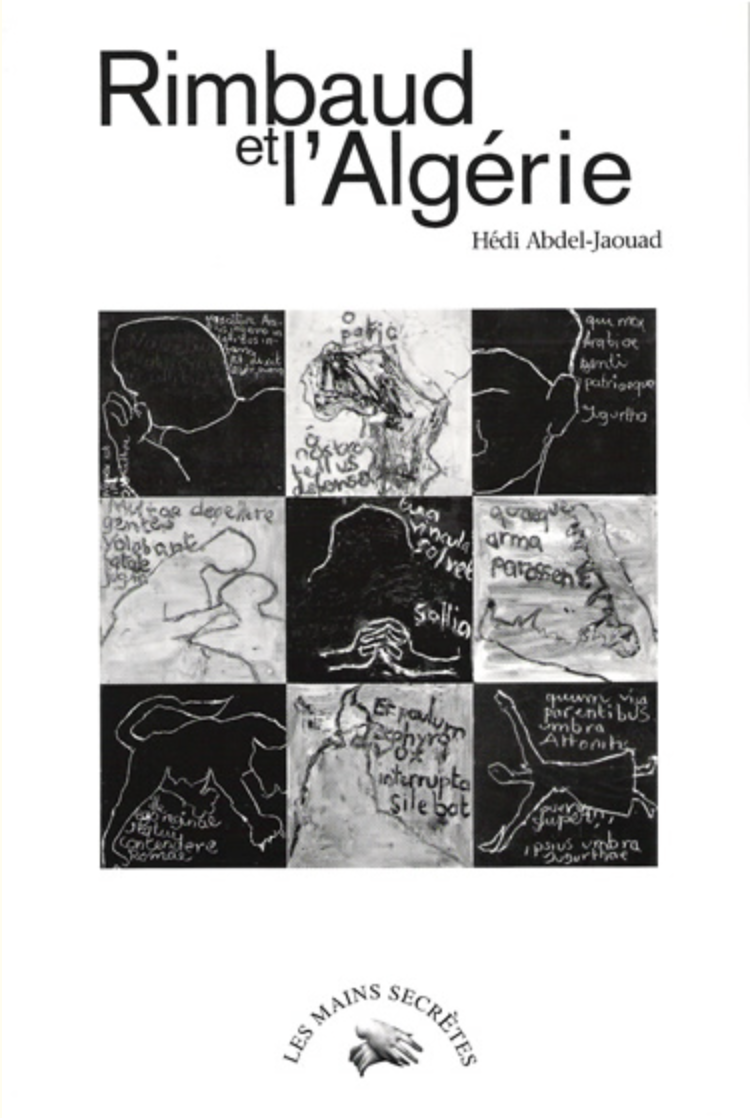
About this Book
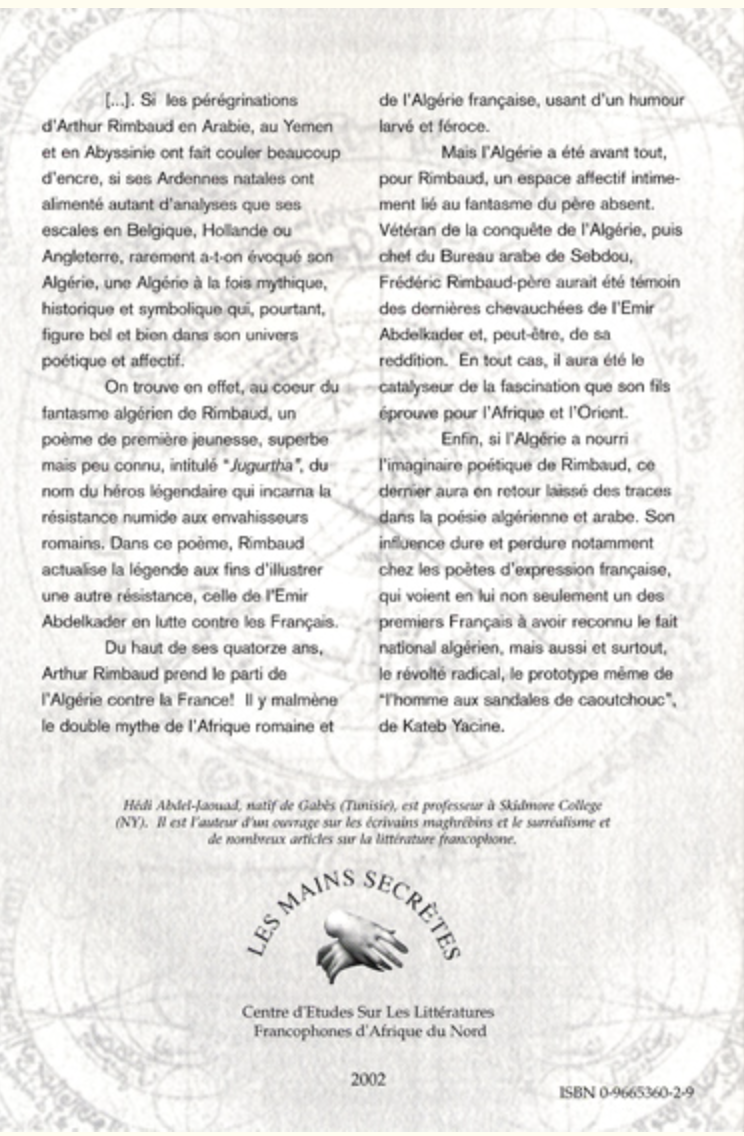
Rimbaud et l'Algérie demonstrates that Algeria has been present in Rimbaud's work from the very beginning of his poetic career, playing a decisive role in the formation of his poetic principles and ideals. The study focuses in particular on Jugurtha, a Latin composition Rimbaud wrote at the age of fourteen for a competition organized by the Académie de Douai in 1869.
In this remarkable early text, the young Rimbaud uses the historical Numidian king Jugurtha as a figure through which to address the destiny of the Algerian resistance leader Abd el-Kader, who had fought to keep Algeria free from French occupation. Rimbaud casts Jugurtha as a symbol of anticolonial defiance — a "new Jugurtha" exhorting Algerian resistance against the European invader.
Abdel-Jaouad also develops a compelling psychoanalytical dimension: Rimbaud's father, a military officer, spent eight years stationed in Algeria. In the poet's psyche, Algeria becomes deeply entangled with the search for the lost father — an absence that shaped both his life and the restless, fugitive energy of his verse.
This study situates Rimbaud not only within European literary history but within the broader colonial and postcolonial entanglement between France and North Africa — an entanglement that, Abdel-Jaouad argues, was formative rather than incidental to Rimbaud's poetics.
Interior
To order this book, contact Éditions Les Mains Secrètes.
Order Information